
Impressionist Days
on letting the whole take shape

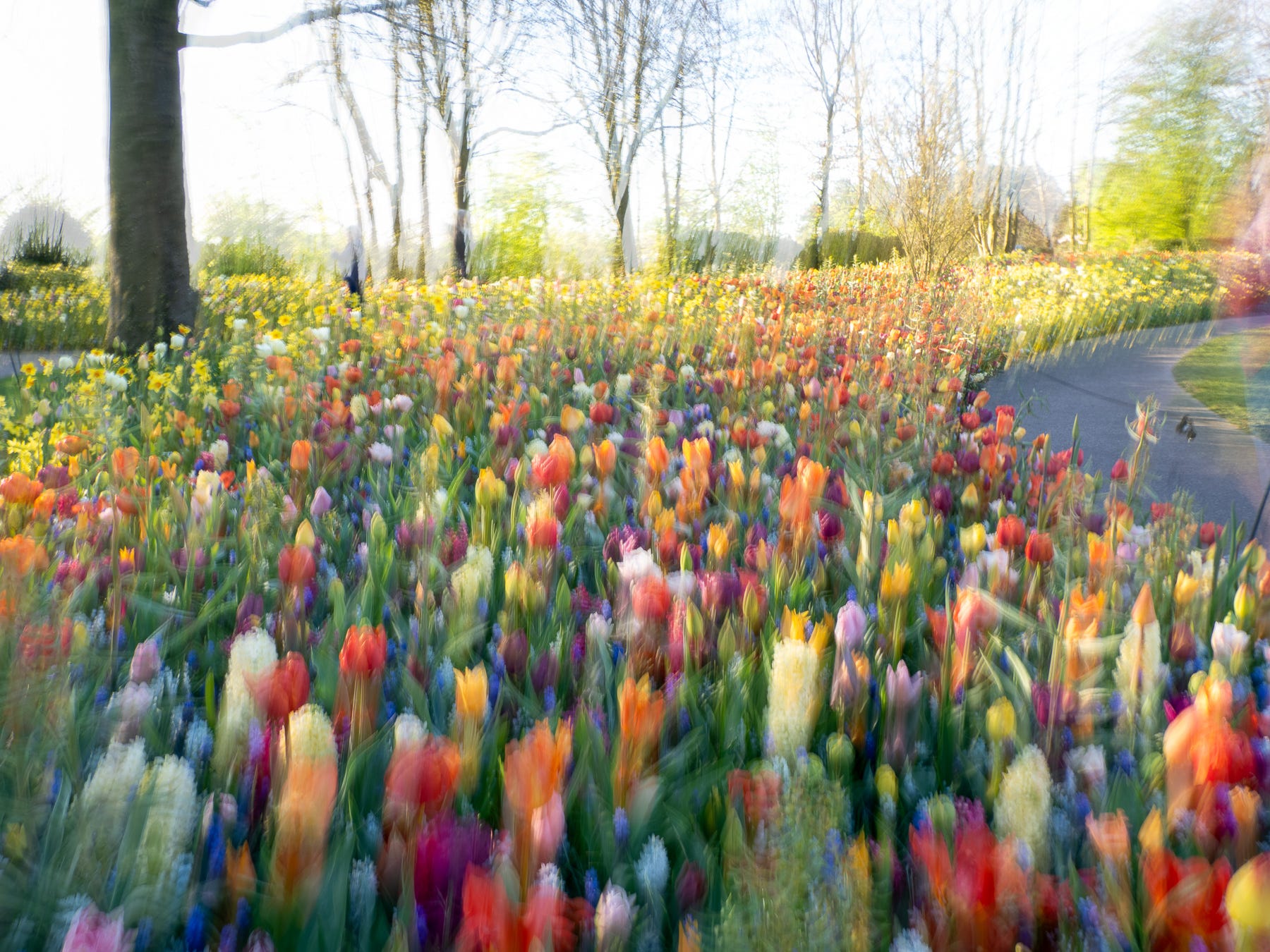
I arrived early, hoping to have a few quiet moments in the gardens before the crowds. Others had the same idea, but we were a small group and well-behaved. At exactly 8 a.m., the guard scanned my ticket and I entered the park. I had 79 acres and seven million flower bulbs at Keukenhof Gardens to myself, or so it seemed.
Leaving my camera, phone, and map tucked in my bag, I spent that precious first hour strolling along the paths, aimlessly wandering through this land of color and scent. Hyacinths, I’ve learned, are the most fragrant.
As the park began to fill, I noticed people hurrying past me. Most were well dressed. Some had children in tow; others seemed to be multiple generations of family.
Am I missing a show? What happens at 10 a.m.?
It was the rush to get to the “Instagram-worthy” location before the real crowds arrived and ruined the background.
I offered to take a photo of two young women, beautifully dressed, who were struggling to get the right angle for their shot. And then I thought how wonderful it would be to have a photo of me and the Blue Car here, amidst these flowers.
Nice, yes. But I stopped myself from going too far down that line of thought. I have noticed a shift on this trip; I find myself taking more photos of the Blue Car now than I did on my U.S. adventure. And more photos of me. It’s still a very small proportion relative to the whole. But it does make me wonder:
When does the documentation of the trip start to dictate the moments?
I don’t have an answer to that question, but I knew that after walking half of the nine miles of paths at Keukenhof, I wanted to keep going. It was time to take out my camera and capture some of this riotous beauty for enjoyment on a cold winter day back in New England.
I got up close to the hyacinths—their tiny petals delighting me with their delicacy and intricacy. I am a sucker for blue and purple flowers. But the photos fell flat. The moment wasn’t in a single flower. It was in the whole.
I put the camera away and kept walking.
…Impressions. That is what I wanted. Not the actual flower, but how it made me feel to be there, in this incredible place that lives for eight weeks and then quietly goes dormant until the next spring. The whole was so much more than any one flowerbed or bloom.
I pulled my camera out again and shifted my approach—not a single flower, not a single bed of blooms, but all of it. Photographers call it Intentional Camera Movement—a carefully blurred photo where nothing is crystal clear, but the feeling of the moment is strong.
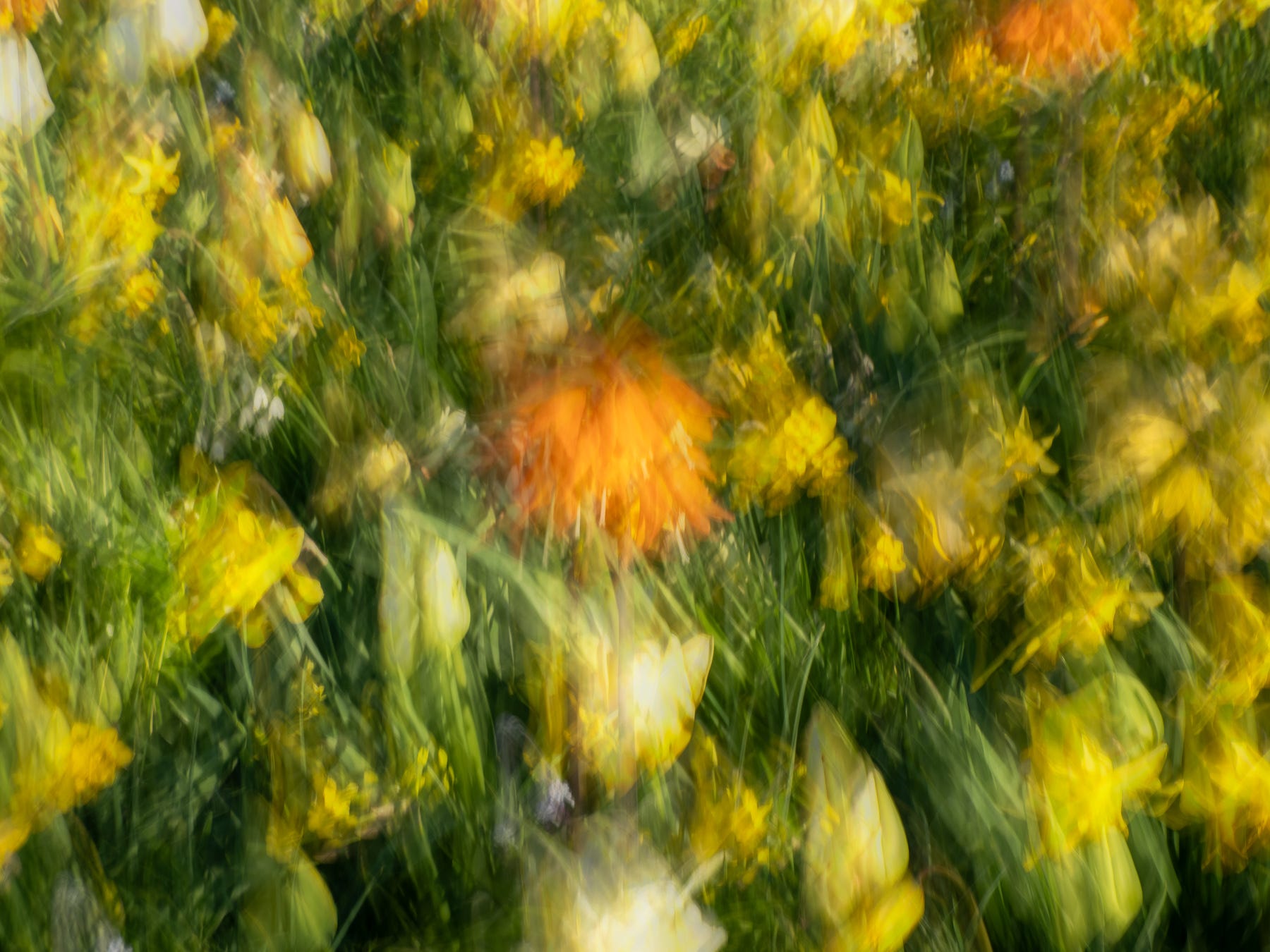
Later, I ate a late lunch at a small café overlooking the flower fields outside the park. I flicked through the images on my camera, then opened my journal and turned the pages before picking up my pen. It occurred to me, as I read entries from early on my trip, that this European adventure has become like the photos I took that morning.
At the start of the trip, getting each day “right” carried weight. The first pages of my journal reflect the newness of it all and the time needed to settle into a rhythm of travel. What do the street signs mean? What are the speed limits? Is it customary to ask for the check, or go to the counter to pay? The pages delineate single moments—anecdotes, struggles, and delightful surprises.
Those moments were important, but they were also consuming. Each one, because it was early in the trip, took on outsized importance. In my mind, they presaged the success of the journey. I was still building trust, measuring the trip one moment at a time.
Somewhere in the last eight weeks, the road trip has transformed—no longer about single days.
The “noise of travel” is gone. It has been silent for a while now, a distant memory. Even as I crossed the border from Germany to The Netherlands last week and began again with a new language, unfamiliar road signs, Dutch customs.
The larger cumulative experience is what matters now. It has become my frame of reference, each splash of color working with the next, not blending into a muddy brown, but forming something brighter and more expansive than any individual day.
Life is like this, whether the bed is in a hotel or at home. No one moment or decision makes or breaks the accumulation of our experiences. It has taken me time to understand this.
For me, the high-stakes moments have always been the parenting ones. My mom heart has carried a recurring anxiety about “getting it right.” Was that the most helpful response? Did I just squash their confidence? Is it okay that I can’t make everything right in their worlds?
Life gains coherence not from perfect moments, but from sustained movement through imperfect ones.
The Intentional Camera Movement photos of Keukenhof Gardens can’t be perfect. That isn’t the goal. And that is liberating: just me playing with shutter speed, moving the camera as I click frame after frame. No pressure.
I am not sure when the focus on individual days gave way to the steady rhythm I move in now. Looking back, I see it began in the snowstorm in Füssen and gathered momentum after the Blue Car’s defective starter was replaced outside of Stuttgart.
It takes time to trust ourselves this way. I remember the same shift on my U.S. road trip. Those first weeks of measuring and correcting, before the accumulation of experiences revealed the shape of a journey that could hold on its own.
My experiences here mirror what life can be at home. We are the accumulation of so many things: joy and loss, accomplishment and failure, solitude and connection. Moments on the road, and quiet evenings in our living rooms. Things ebb and flow, but the whole—that blurred picture made up of color and light—is so much lovelier than any single petal.
Trusting the larger impressionist picture of this trip, and my life, offers just enough support to move through my days differently. I am now the painter, the photographer, interpreting this trip and my world.
Last Sunday, I navigated the narrow streets of Delft without GPS, trusting myself more than the sometimes-errant directions to guide me away from pedestrian-only streets, past the bicycles, and toward public parking. And I was relaxed enough to enjoy it.
Two days after Keukenhof, I wandered the tulip fields of the Bollenstreek. Not lost, but also not knowing exactly where I was. I pulled over when a stretch of color caught my eye and turned down roads without knowing where they would lead. I wasn’t worried, even though I had a ferry to catch that afternoon.
Earlier in the trip, I would have arrived hours ahead of time, just in case. Because it was all new.
Not anymore.
I drove when I felt like driving. I stopped when I wanted to stop. I trusted that I would find my way—that the timing would work itself out, that whatever the day held would simply become part of it.
And it did.
The days no longer feel like something to get right. They feel like something to move through—not carelessly, but with enough trust to let them unfold.
When I look back now at the early pages of my journal, I can see how tightly I held each day, giving too much weight to each decision, as if the shape of the whole might be determined there.
Now, after 55 days on the road, what is emerging is not a collection of perfect days, each petal visible and distinct.
It is a collection of lived, messy moments: color, movement, light—
gathering, layering, until something whole begins to take shape.
Susan
Blue Car Road Trip Miles: 2,830
From the Blue Car Europe Series
For the Previous Essay: Das Blaue Auto
What i took from this is trusting oneself and that each moment is just part of a much bigger experience and worth just that, in time, effort and fretting, and the blur may be the best part!
Thanks again, Susan
Great read. I watched you morph into the flower (vibe) you were looking for.
well done.
I'm a Porsche guy, started while stationed in Stuttgart, 1966, currently driving a 65 356C coupe, ole blue. Thanks, Danke!